OCCUPY WEEKLY: THE PEOPLE’S CAUCUS


The year’s last Occupy Weekly:

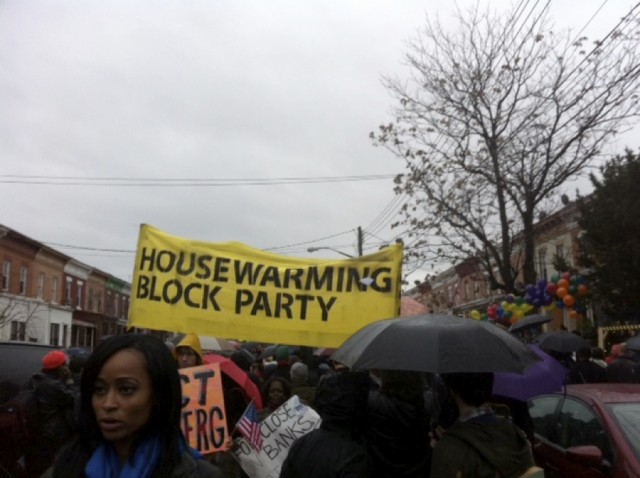
This week Occupy activists in Iowa, who’ve been urging caucus-goers to vote for “Uncommitted” in Tuesday’s Republican and Democratic caucuses, cried fowl when the Iowa GOP signaled it would only count votes for declared presidential candidates this year. Tuesday night, Iowans launched a “People’s Caucus,” at which they discussed policy resolutions and then broke up into “dispreference groups” based on which candidates they were most eager to demonstrate against. Activists were arrested at campaign offices and at a Wells Fargo, which they had linked back to a Romney office via a cardboard “pipeline” representing the cash flow from the bank to the candidate.

Here’s the rest. Happy New Year.
FIVE FROM ’11

I’m on vacation this week.  Here are five pieces I’m proud of that I wrote in 2011:

What Could a Telecom Merger Mean for Economic Democracy: How the debate over an AT&T-T Mobile merger revealed a tension between anti-monopolism and industrial power

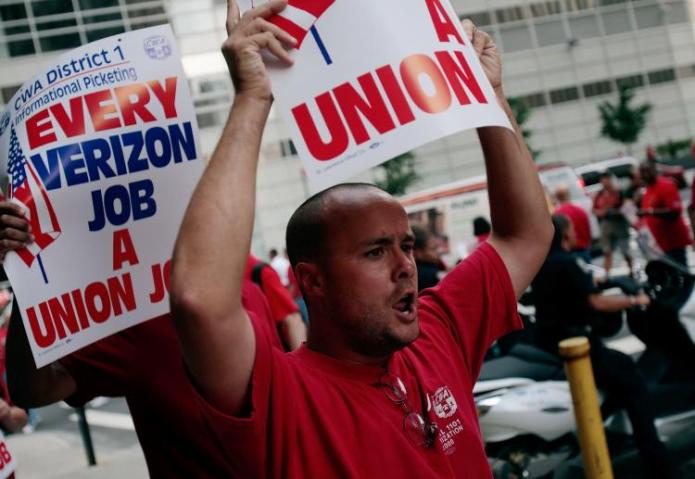
Strike, Interrupted: How Verizon has been winning the war to keep union members a shrinking minority among their co-workers

Ambisextrous: On coming out as bisexual, and what took me so long

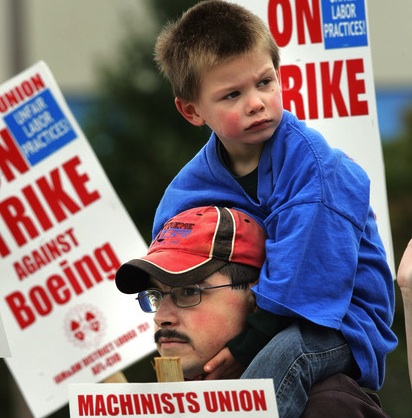
Conflicting Dreams: The Strikes That Made Boeing a National Flashpoint: A profile of the strikes and strikers behind the NLRB case of the century.

Fighting Privatization, Occupy Activists at CUNY and UC Kick Into High Gear: How does confronting police violence and publicly-appointed privatizers shape students’ view of the state?

Thanks for reading, and for all the generosity, advice, and support this year.  Happy Holidays.

Creche

OCCUPY WEEKLY: NO ROOM AT THE INN

Creche
This week’s Occupy Weekly at the American Prospect:

Since the November 15 eviction from Zuccotti Park, occupiers have been eyeing Duarte Park, an unused lot owned by Trinity Church in Manhattan’s financial district. The wealthy and progressive church has been providing Occupy with indoor meeting space, but repeatedly rebuffed appeals to allow a Duarte occupation, even after those appeals escalated to a hunger strike. After unsuccessful attempts by clergy to mediate the dispute, some occupiers climbed the fence surrounding Duarte Park earlier this month. Police arrested about fifty of them.

Check it out

WILL THE NLRB LET GRADUATE STUDENT WORKERS DOWN AGAIN?


At In These Times, I ask whether the NLRB will go into paralysis next week without restoring graduate student workers’ rights:

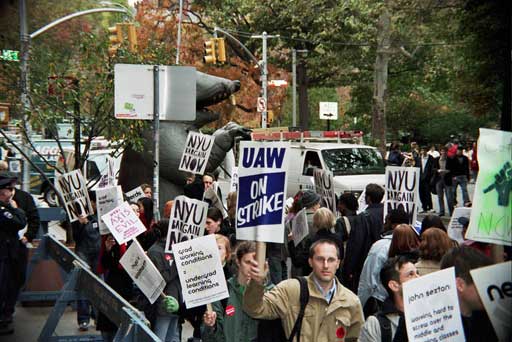
Dacia Mitchell has taught dozens of students. This year, she stopped teaching because the money she was paid for it was less than the cost of childcare for her two year-old daughter. She worries about how class size and teacher workload affect the quality of teaching at New York University, where she works. So she and her co-workers, who once had union recognition, are fighting to win it back. But under current law, they have no right to recognition, because they’re graduate students.

Here’s the rest.

OCCUPY WEEKLY: SHOWDOWN AT THE DOCKS


My latest Occupy Weekly for The Prospect:

On Monday, occupiers set out to shut down ports across the West Coast. Targets included SSA, which is largely owned by Goldman Sachs, and the Port of Longview, which multinational EGT is trying to operate as the West Coast’s only port without members of the International Longshore and Warehouse Union (ILWU). The actions, which shut down operations at Longview, Oakland, and Portland, were opposed by ILWU leadership. They led to intense debate among and between occupiers and unionists over tactics—who the blockades hurt, whether they’re worth the legal risks—and democracy, namely, how democratic the ILWU and the Occupy movement each are, and whether workers should have a veto over actions where they work.

Check it out.

FIGHTING PRIVATIZATION, OCCUPY ACTIVISTS AT CUNY AND UC KICK INTO HIGH GEAR


For The Nation, I wrote about how public university activists are occupying their campuses, and how they’re thinking about government:

Every afternoon last week, students, teachers, and neighbors gathered to hold classes on UC Berkeley’s Sproul Plaza. Everyone was welcome. They sat on the ground, or on what are now called the Mario Savio Steps. Topics included the economics of debt, the poetry of persecution, and Chilean student movement. There has also been a massage train and a gospel chorus. “There are no walls,” said graduate student Michelle Ty, “And it’s free.” You could call it a public university. The irony, not lost on these students or their East Coast counterparts, is that they’re supposed to already have one.

Check it out.

UNION-BUSTER TO MANAGERS: FEAR THE NEW ELECTION RULES – AND HOLD FIVE MEETINGS


For In These Times, what I heard on an anti-union conference call:

Days after the National Labor Relations Board voted to proceed with revised union election rules, the anti-union Labor Relations Institute held a “webinar” for human resources professionals to discuss how to remain “union free.” “Now is the time,” said LRI’s Philip Wilson, who ran the webinar/ conference call. “If you don’t have a strategy for a quick election environment…you’ve got to get it now. You have ninety days. The clock is ticking as we speak.”

Check it out.

HOW BOEING GOT AWAY WITH BREAKING THE LAW


At Salon, my take on the end of the NLRB complaint of the century:

Republicans won’t have the National Labor Relations Board’s case against Boeing to kick around anymore – though no doubt they’ll keep flogging its corpse. On Friday, the NLRB announced it was dropping its most famous investigation in years. The union that had brought the case, the International Association of Machinists, asked the NLRB to relent following a compromise reached with management. The IAM is touting its deal as a better alternative than pursuing the NLRB case. They’re right – which is a damning measure of how poorly the Obama administration defends workers’ human rights.

Here’s the rest.

OCCUPY WEEKLY: FROM K STREET TO MAIN STREET


This week’s Occupy Weekly at the Prospect:

This week featured a vision of two different paths Occupy Wall Street could take after being evicted from public parks across the country. In Washington, D.C., activists from labor, Occupy, and elsewhere held a “99% in DC” event that began with a day of visits to congressional offices to demand jobs legislation. Occupiers then followed up by shutting down intersections on K Street, which is known for the number of lobbying organizations headquartered there. Tuesday also marked a major escalation of the movement to stop foreclosures.

Here’s the rest.

OCCUPY WEEKLY: SCHOOLING CAPITALISM


This week’s Occupy Weekly at the Prospect:

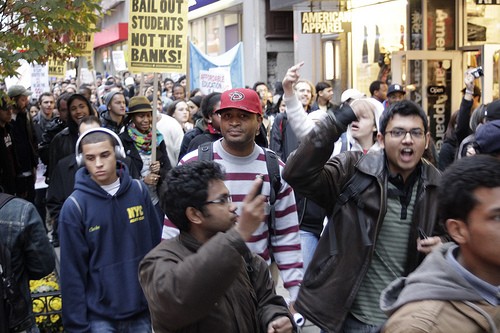
This week both coasts saw student marches on Monday and big city police raids on Tuesday. As the chancellors of the University of California met by teleconference, students through the UC system held demonstrations and teach-ins opposing tuition hikes and police violence. At UC Davis, they called a student strike. Meanwhile their counterparts at City University of New York marched on their own Board of Trustees as it voted on five years of tuition hikes.

Here’s the rest.

AMERICAN AIRLINES UNION QUESTIONS BANKRUPTCY MOTIVE


My In These Times piece on the labor history behind American Airlines’ bankruptcy:

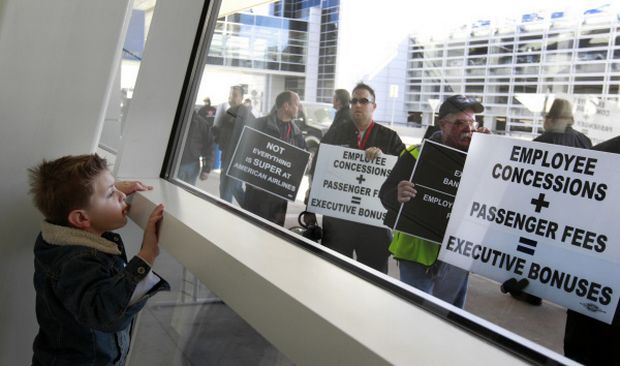
American Airlines’ parent company filed for bankruptcy protection on Tuesday, throwing into question the fate of thousands of union members’ jobs, their contracts and an eight year-old partnership agreement under which they’ve made hefty sacrifices. “I was shocked that it happened when it happened…” says Transport Workers Union President James Little. “I thought we could have avoided it.” Little, whose union represents 26,650 mechanics, technicians, and fleet service workers at American Airline and sibling airline American Eagle, believes “a major motivation” for management was the desire “to get out of bankruptcy what you couldn’t get at the table.”

Check it out.

FORECLOSURES – THE END IS NOT NEAR


In the Noted section of this week’s The Nation, I have a brief take on a new report on foreclosures:

At a recent meeting with the editorial board of the Las Vegas Review-Journal, Republican front-runner Mitt Romney said, “Don’t try and stop the foreclosure process. Let it run its course and hit the bottom.” A new report suggests that even after all the damage wrought by the crisis, the bottom is a long way off.

Subscribers can read the whole thing here.