I was on KUOW (Seattle)’s “The Conversation” talking with host Ross Reynolds and callers about my Salon piece on the struggle over the Postal Service. Here’s the audio.
I was on KUOW (Seattle)’s “The Conversation” talking with host Ross Reynolds and callers about my Salon piece on the struggle over the Postal Service. Here’s the audio.

At In These Times:
Amid a deluge of right-wing state and local laws, paid sick leave has offered a rare bright spot for progressives. Its progress hasn’t been steady, but it hasn’t been slow. Five years after San Francisco became the first U.S. city to mandate that employers provide paid sick leave to employees, similar bills have been debated or passed across the United States.
Washington, DC and Milwaukee followed San Francisco in 2008; Wisconsin Governor Scott Walker signed a law overriding the Milwaukee bill last year. Last year, Seattle passed a citywide law, Denver voters defeated one, and Connecticut passed the first statewide paid sick leave law. Philadelphia’s mayor vetoed a broad mandate but allowed one only covering city contractors and subsidy recipients to become law. Governor Deval Patrick backs a statewide bill in Massachusetts. And in New York City, activists are mounting a renewed push following their defeat in 2010. Now, as then, the legislation’s fate will land in the hands of New York City Council Speaker Christine Quinn, a former activist turned business-friendly Bloomberg ally and potential future mayor.
I was on Peter Tilden’s show on KABC (Los Angeles) to discuss my Salon article on college athletes organizing. Here’s the audio.
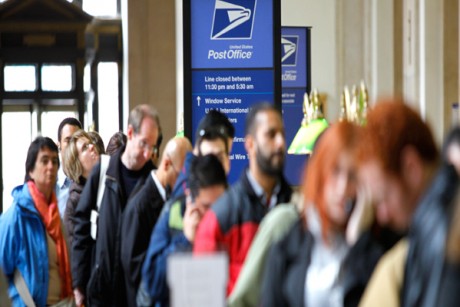
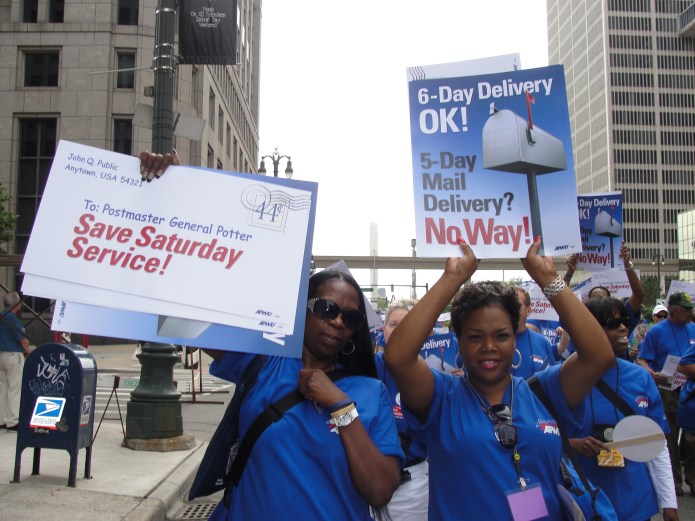
After a stopgap measure last year, Congress will once again debate whether the United States Postal Service as we know it can survive. The better question is: Will Congress let it?
The U.S. Postal Service is at risk of defaulting on healthcare obligations or exceeding its debt limit by the end of the year. Last month, USPS management unveiled a “Path to Profitability” that would eliminate over a hundred thousand jobs, end Saturday service and loosen overnight delivery guarantees. The Postal Service also proposes to shutter thousands of post offices. “Under the existing laws, the overall financial situation for the Postal Service is poor,” says CFO Joe Corbett. Republicans have been more dire, and none more so than Oversight Committee Chairman Darrell Issa, who warned of a “crisis that is bringing USPS to the brink of collapse.”
When the Philadelphia City Council meets April 4, Community College of Philadelphia workers will be there questioning their employer’s stewardship of its city-backed budget. “We support funding for the community college…” says biology teacher John Braxton, “but on the other hand we do want them to ask tough questions of the President.” Braxton is co-president of the Faculty and Staff Federation of CCP, whose trip to the City Council comes amid an escalating contract fight.

With college basketball’s March Madness approaching, commentators will soon regale us with tales of underdogs, upsets and last second heroics. But few will mention the moment, 17 years ago, when a group of players planned to stop the games.
Rigo Núñez, a reserve on the 1995 University of Massachusetts basketball team, says more than 20 players from several teams attempted to organize an action to halt March Madness. The plan was that the players would show up on the court, in full uniform, and refuse to play ball. The goal, says Núñez, was to “paralyze the whole NCAA.” William Friday, who co-chaired the Knight Commission on College Athletics at the time, recalled to the Atlantic the time he was warned about a planned March Madness strike.
The Wisconsin recall ad wars have a new player: the Center for Union Facts, the well-heeled union-bashing outfit founded by food and beverage super-lobbyist Rick Berman. A CUF source says the self-described “union watchdog” is spending “just over a million dollars” in Wisconsin, and “may do more in the coming weeks.”
Unlike the Koch-founded Americans for Prosperity’s pro-Walker campaign, the CUF’s ad buy makes no mention of Wisconsin or the union-busting “budget repair” that Gov. Scott Walker forced through last year. Rather, it consists entirely of ads that CUF has already been running around the country. You may have seen one on cable during GOP debates, or during the Super Bowl. But make no mistake, the ads are about keeping Walker in office.
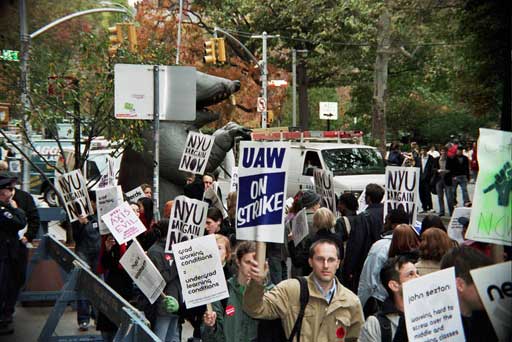
Republicans have accomplished what Democrats and unions never could: they’ve made the National Labor Relations Board a household name. The NLRB, which in the Bush era churned out anti-union rulings in obscurity, now stars in stump speeches, Congressional hearings, and TV ads. The day after the Iowa Caucus, Mitt Romney launched a South Carolina TV ad condemning the NLRB as “stacked with union stooges selected by the President.” He lost the state to Newt Gingrich, who promised South Carolinians that he would seek to unilaterally eliminate the agency.
On New Year’s Eve, labor was bracing for the NLRB, which interprets and enforces labor law, to be rendered comatose for 2012. An expiring appointment was set to leave the Board one member short of a quorum, and thus unable to rule on any cases. Senate Republicans had promised to prevent any new appointments. But Obama acted to keep the agency’s lights on, making three new NLRB recess appointments in defiance of Republican claims that the Senate was in session.
With Obama’s re-election uncertain and pro-labor legislation stillborn, the NLRB’s actions this year may represent the last chance for years at improving the legal regime facing workers seeking to extract a measure of justice from the one percent.

Joe Clement had me back on KBOO’s “Old Mole Variety Hour,” this time to discuss my Salon piece on “Right to Work” on the difference between a union as a business and union and a union as a movement. Here’s the audio.
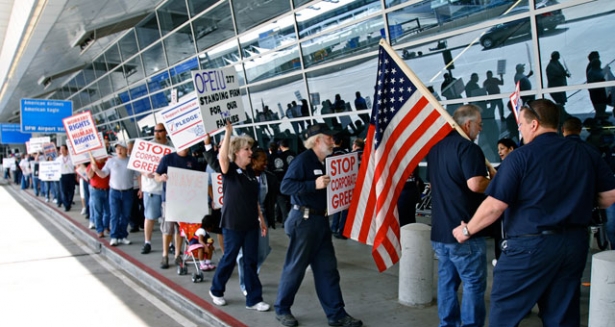
Weeks after American Airlines’ parent company AMR submitted a bankruptcy proposal to its three unions, labor and management say time is running out to reach negotiated settlements. Any unions that don’t reach deals with AMR may have their new contract terms, and the number of layoffs, set directly by a bankruptcy judge. The president of the largest of these unions, the Transport Workers Union’s Jim Little, says he expects negotiations will be either completed or abandoned within the next two weeks.
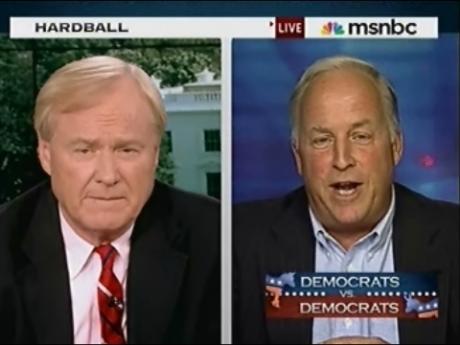
At the Prospect: My interview with Democracy for America Chair Jim Dean:
Some of the DFA’s most prominent Obama-era national campaigns—like the public-option push and the Employee Free Choice Act efforts—have been unsuccessful. Should progressives have taken a different approach?
That’s tough. I don’t think Obama’s a horrible guy or anything. But there’s a great deal of frustration with him. It’s not about the “what,” because they’ve actually gotten a lot done—it’s the “how.” Everyone thought his election was a game changer, and Washington needed a cultural change. There’s a sense that it wasn’t his thing—that he was perfectly comfortable in a culture that nobody else thinks is very good.
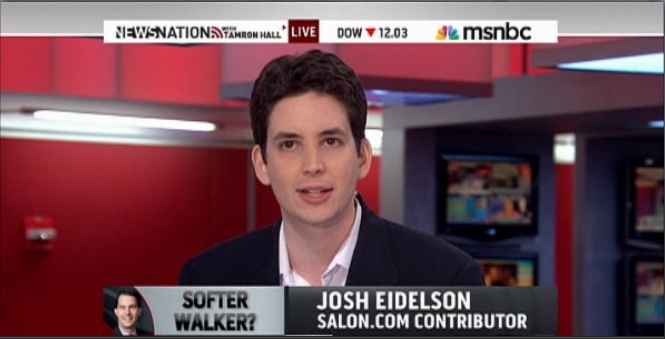
I was on Tamron Hall’s News Nation yesterday on MSNBC to discuss my latest Salon piece on Scott Walker and David Koch. Here’s the video.
 Josh Eidelson